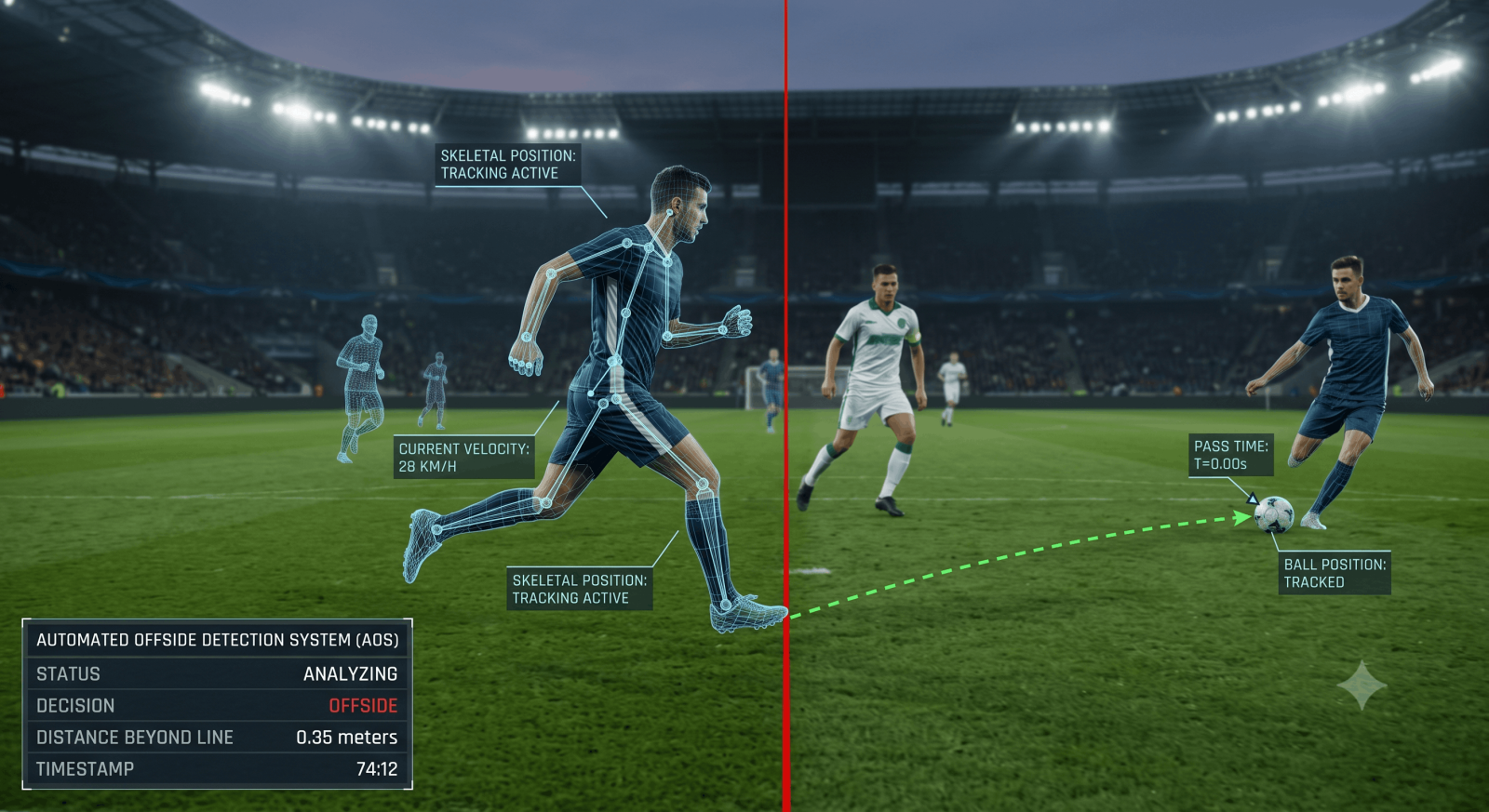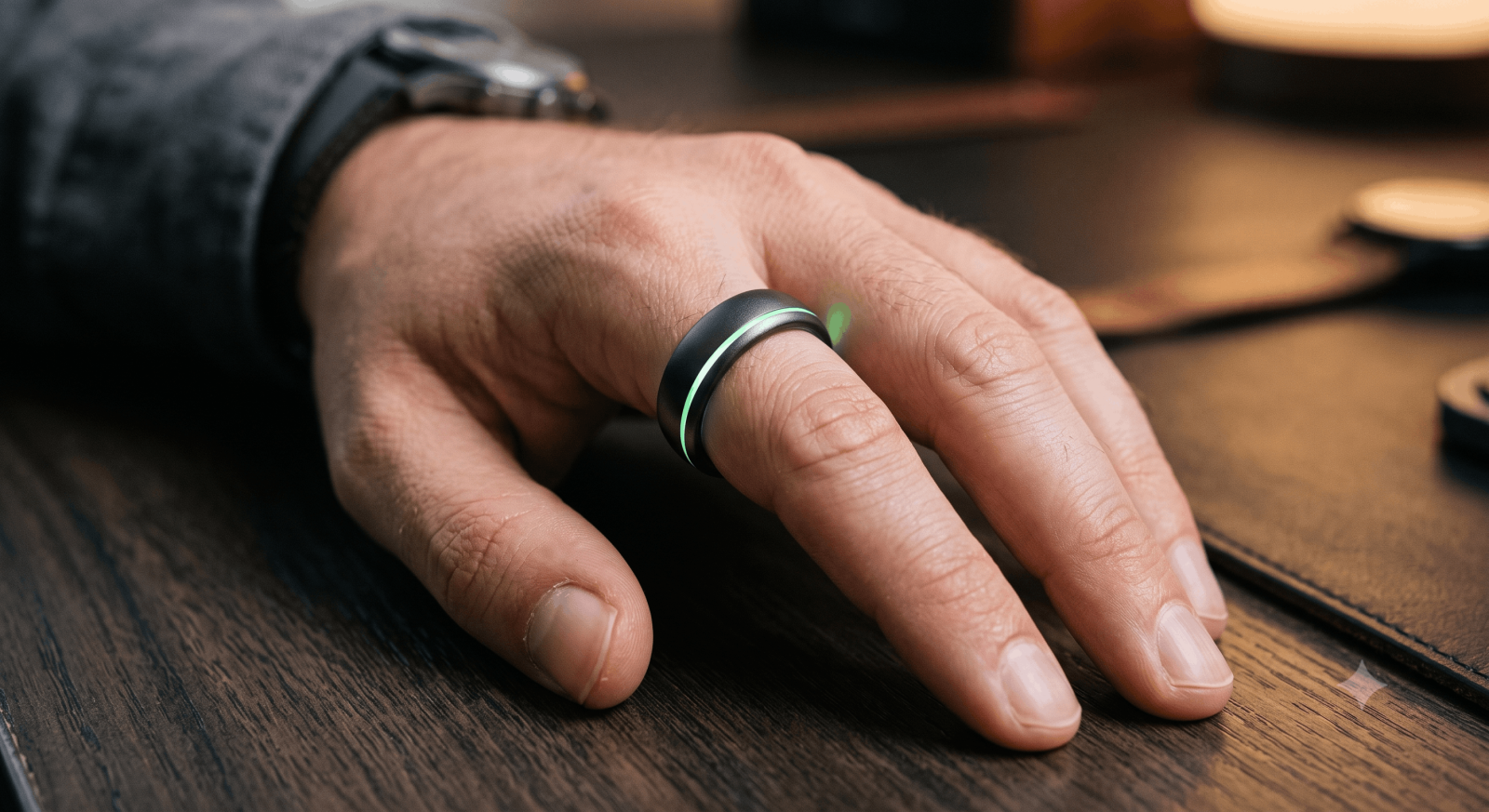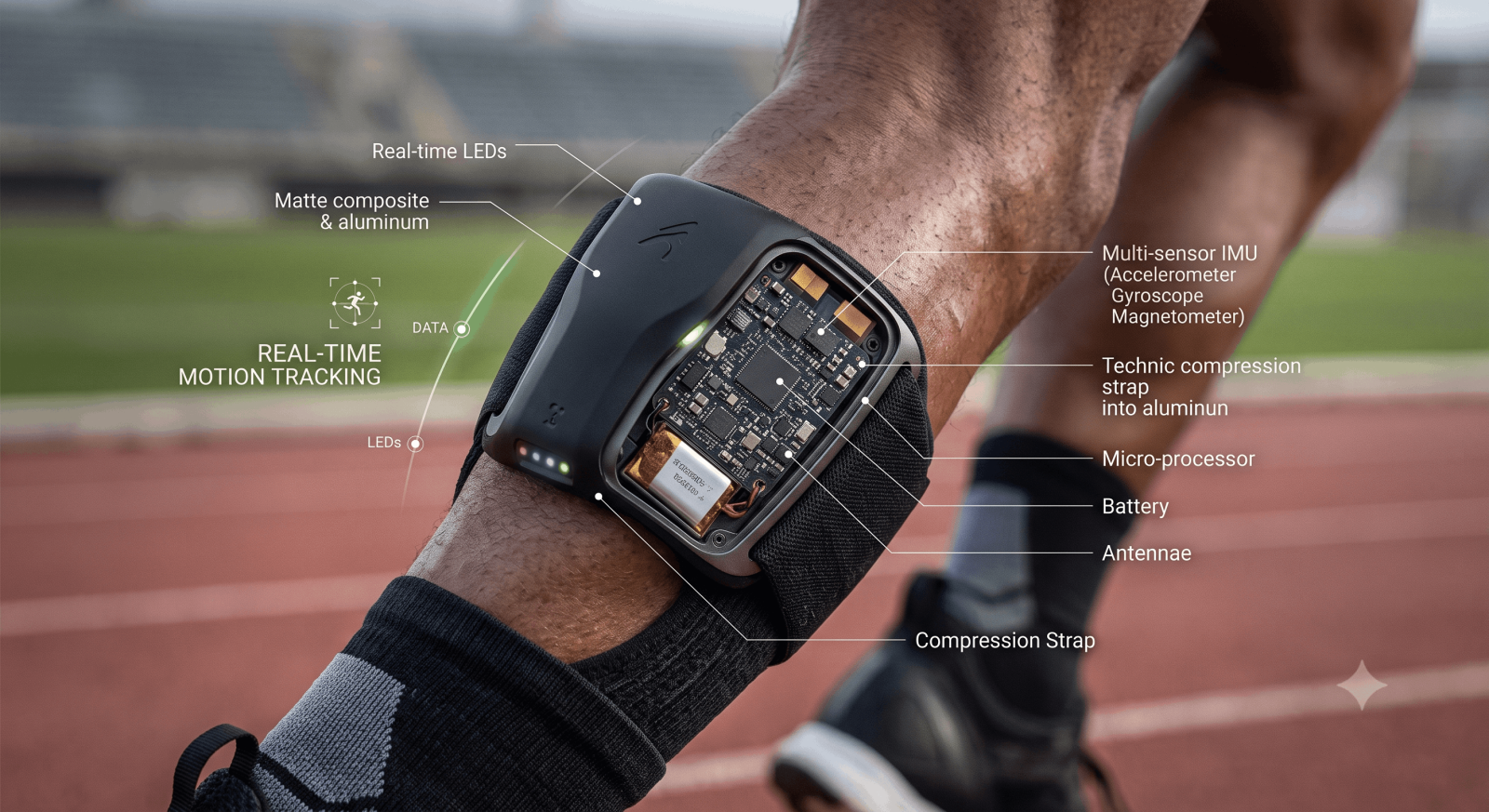
The global AI sports analytics market is not just expanding; it is undergoing a fundamental structural shift, projected to surge past a valuation of $33 billion by 2031. In 2026, the technology landscape has firmly established that modern sports analytics is no longer just about generating better statistics on a spreadsheet. It is now about computer vision systems tracking every player on a field twenty times per second, wearable sensors evaluating exertion at a cellular level, and neural networks interpreting the complexities of human movement. At the absolute center of this transformation is Edge AI—a technological paradigm that processes vast amounts of data locally directly on the wearable device, rather than routing it through distant cloud servers.
This migration from cloud computing to the "edge" represents the most critical leap in athletic performance tracking this decade. By cutting the cord to the cloud, professional sports organizations are finally achieving what was once considered the holy grail of coaching: instantaneous, zero-latency biomechanical feedback during the exact moment of athletic execution.
The Core Shift: Moving from Cloud to the Edge
Historically, the fitness and sports wearable industry operated on a simple loop. An athlete would wear a device that collected raw data—such as heart rate, GPS coordinates, or basic accelerometer readings—and that raw data would be beamed to a cloud server for processing. The server would run its algorithms and eventually send a readable report back to the user’s smartphone.
While this cloud-centric approach worked perfectly for logging steps or mapping a morning jog, it introduced a fatal flaw for elite sports analytics: latency. In professional sports, where outcomes are determined in milliseconds, delayed data is useless data. Furthermore, transmitting high-frequency biomechanical data required constant, robust internet connections, which are notoriously unreliable in massive, concrete stadiums or remote training facilities.
Edge AI solves this by placing the analytical brain directly inside the sensor. Modern sports wearables are now equipped with miniaturized, highly efficient microprocessors capable of running complex artificial intelligence algorithms locally. Because the intelligence is moved closer to the action, the device interprets movement exactly as it happens. There is no waiting for a server ping. The analysis is performed on-device, in real time, entirely independent of Wi-Fi or cellular networks.
Real-Time Wearables: A Biomechanical Game Changer
By utilizing Edge AI paired with precision sensor fusion—which combines data from multiple sensors to paint a comprehensive picture of movement—wearables are democratizing the kind of biomechanical insights that used to require a multi-million-dollar biomechanics lab.
High-Frequency Court Analytics in Basketball
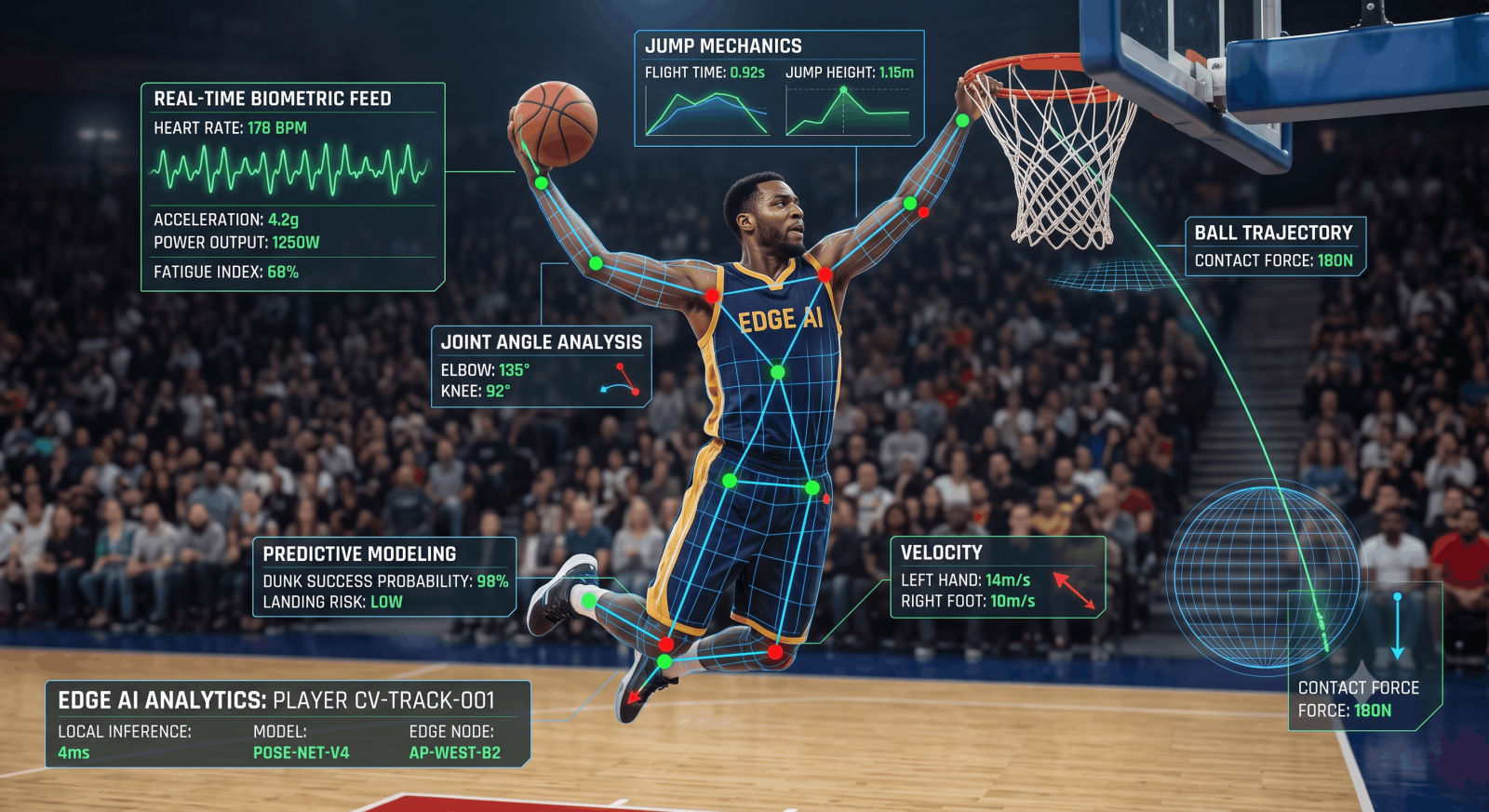
In basketball, the volume of spatial data generated is staggering. Systems like Second Spectrum already track player and ball movements at 25 frames per second using sophisticated camera arrays. However, when paired with Edge AI wearables, the insights become hyper-personalized. Wearable Inertial Measurement Unit (IMU) systems can now monitor an athlete's jump height, the exact force of their landing, and the consistency of their shooting motion mid-game.
If a player is unknowingly favoring one leg upon landing due to localized muscle fatigue, the edge-enabled device instantly detects the asymmetry and can alert the coaching staff on the sideline. This allows coaches to pull the player before an Achilles tear occurs, transitioning the technology from performance enhancement to proactive injury prevention.
Precision Mechanics in Soccer
Soccer presents a different set of challenges due to the sheer size of the pitch and the constant, high-speed directional changes required. Today’s sophisticated IMU sensors measure intricate details such as running mechanics, dribble speed, stride length, and ground contact time.
Using Edge AI, a wearable device on a striker can classify movement phases automatically—distinguishing between a slow jog, a sudden sprint, and the explosive impact of a shot on goal. Coaches can receive real-time updates regarding a player's running efficiency, allowing them to adjust tactics immediately if a key player's acceleration patterns begin to degrade in the 80th minute of a match
Overcoming the Hidden Frictions of Pro-Level Tech
The integration of artificial intelligence directly into localized hardware does not just improve the speed of the data; it actively solves massive infrastructure and security hurdles that sports franchises have battled for years.
Battery Efficiency and Hardware Constraints
One of the most persistent bottlenecks in wearable technology has been battery life. Transmitting massive datasets to the cloud continuously drains power at an unsustainable rate. Because Edge AI processes data locally and only transmits tiny, synthesized summaries (or alerts) rather than raw, continuous data streams, it optimizes power consumption dramatically. This energy efficiency ensures that a lightweight tracker can survive an entire marathon, an extended training camp, or a grueling overtime match without requiring a bulky, restrictive battery pack that would alter an athlete's natural movement.
Protecting Sensitive Athlete Data
In the modern sports era, an elite athlete's physical data is arguably their most valuable and sensitive asset. Information regarding an impending injury, chronic fatigue, or cardiac irregularities could heavily influence contract negotiations, draft stock, and betting markets.
By keeping data processing on the device, Edge AI drastically minimizes the need to transmit highly sensitive health information across vulnerable external networks. In most applications, raw biometric data never leaves the wearable device; only actionable insights are shared with authorized personnel, significantly mitigating the risk of data breaches and keeping sports organizations compliant with increasingly strict health data privacy regulations.
E-E-A-T Experience Section: Across prominent athletic training forums and sports medicine communities, the sentiment regarding Edge AI integration has been a mixture of immense relief and slight overwhelm. Many strength and conditioning coaches highlight that previous cloud-reliant trackers were frustratingly slow—meaning that by the time stride asymmetries or fatigue markers were flagged by the software, the training session was already over, and the injury risk had passed. As one Division I athletic trainer summarized in a recent physical therapy roundtable, "Having the smart sensor alert the athlete's smartwatch mid-sprint that their ground contact time is lagging saves hamstrings; waiting for an iPad to sync two hours later does not." However, casual athletes attempting to adopt pro-level tech often express "data fatigue," noting that while the instantaneous feedback on mechanics like wrist-hinge timing or landing force is incredibly accurate, interpreting the sheer volume of real-time metrics without a dedicated coach can feel paralyzing.
What the Future Holds for Sports Tech in 2026
The transition from subjective, visual coaching to objective, data-driven optimization is now fully cemented in professional leagues globally. As we move deeper into 2026, the lines between software analytics and physical hardware are blurring. Edge AI is actively proving that the future of athletic dominance does not lie in the cloud, but right on the athlete's body—calculating, predicting, and adjusting in the very milliseconds that separate a championship from a defeat.