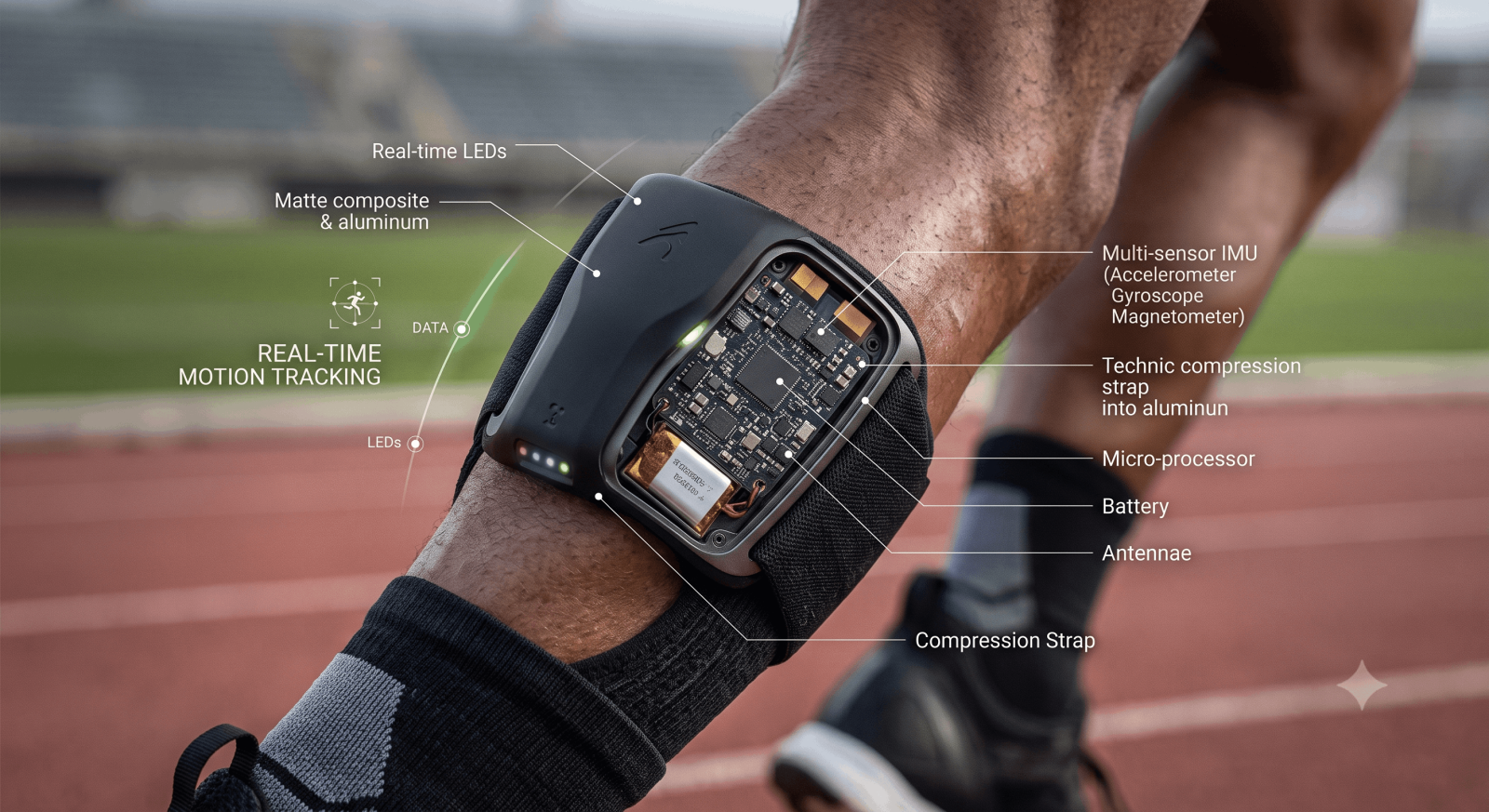
When fans walk into a modern arena or venue in 2026, they are not just entering a concrete structure filled with seats—they are stepping inside a massive, distributed computing network. While early sports technology focused primarily on broadcasting video to home viewers or capturing basic stats on the field, the modern smart stadium relies on an intricate web of edge computing, high-density optical camera arrays, automated decision engines, and real-time spatial simulation.
At the core of this venue transformation are two major technological pillars: automated refereeing powered by advanced computer vision, and venue-wide digital twin technology. Together, these innovations are solving logistical nightmares for stadium operators, eliminating Human error in critical officiating moments, and fundamentally altering how live sports are experienced both in the stands and on home screens.
The Rise of Automated Refereeing: Precision Over Human Error
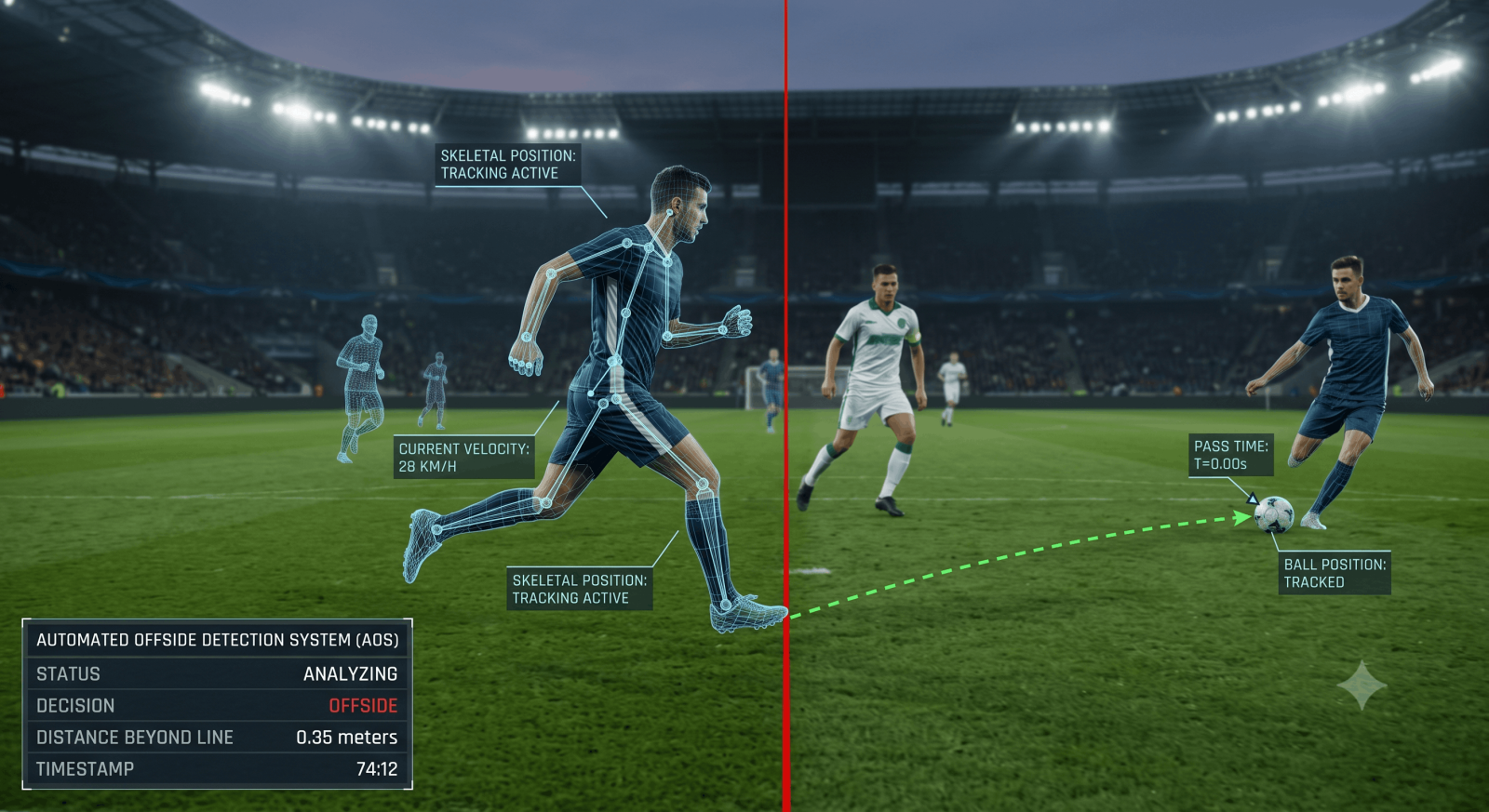
Officiating controversies have plagued professional sports since their inception. A miscalled strike zone in baseball, an missed offside call in soccer, or a subjective out-of-bounds ruling in tennis can instantly change the outcome of a multi-million-dollar game. In 2026, artificial intelligence is stepping into the officiating crew to ensure objective precision.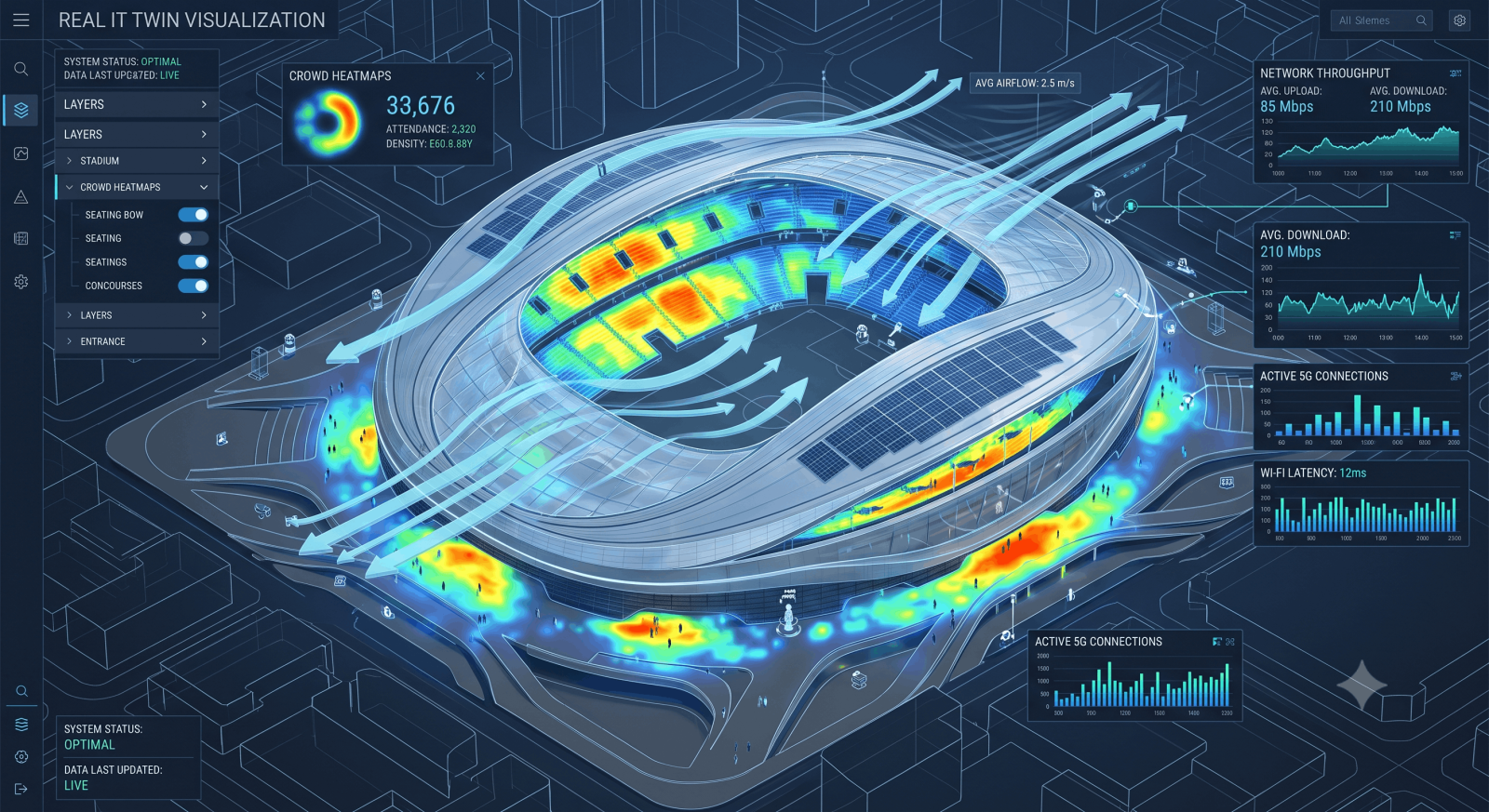
High-Speed Computer Vision and Multi-Camera Arrays
Modern AI officiating systems do not rely on a single camera or simple video replays. Instead, stadiums are outfitted with dozens of high-speed, ultra-high-definition cameras shooting at 120 to 240 frames per second. These camera arrays feed continuous spatial streams into localized edge servers.
By utilizing advanced computer vision and neural networks, automated refereeing platforms perform instantaneous skeletal tracking. In sports like soccer, multi-camera systems track up to 29 individual biomechanical data points per player, 50 times per second. When a ball is kicked, the software evaluates the precise spatial coordinates of every player in relation to the defensive line at the exact microsecond of contact. If an offensive player is in an offside position, the AI alerts the human video assistant or main referee in less than half a second—completely removing human lag and line-drawing guesswork from the equation.
Automated Ball-Strike Systems in Baseball and Tennis
In court and diamond sports, the strike zone or line boundary is no longer subject to human interpretation. Computer vision platforms map a three-dimensional, personalized strike zone for every batter based on their height and stance. When the pitch is thrown, optical sensors track the ball’s trajectory, seam orientation, and point of impact as it crosses the home plate margin, communicating a "ball" or "strike" call directly into an umpire's earpiece via an audio signal instantly.
This hybrid approach allows the human referee to maintain control of game flow, player management, and safety rulings while outsourcing split-second, spatial calls to automated decision algorithms.
Real-World Fan Sentiment and the Officiating Debate
Despite the undeniable mathematical accuracy of automated officiating systems, public acceptance among sports fans and venue attendees presents a far more nuanced picture. Scanning through sports fan subreddits, call-in radio broadcasts, and stadium supporter groups in 2026 reveals a deeply divided audience.
On one hand, tech-forward fans and sports bettors praise the elimination of egregious human mistakes, noting that games are far more fair when key decisions are grounded in objective data. As one season-ticket holder recently expressed during a major league forum discussion, "I don't mind losing a close match if my team was genuinely outplayed, but losing because a line judge blinked is infuriating. The AI calls it right every single time."
On the other hand, traditionalists and stadium goers voice frustration regarding the "sterilization" of the sport and the sudden, clinical interruptions to momentum. Many spectators report feeling alienated when a goal celebration is delayed by ten seconds for a behind-the-scenes algorithmic check. There is also a distinct loss of the emotional release that traditionally accompanied arguing over subjective calls—a core component of sports fandom culture for generations. The consensus among sports venue analysts is that while automated officiating is an operational triumph, leagues must refine how rulings are communicated inside the stadium to prevent dead-air moments that drain live crowd energy.
Digital Twins: Simulating Stadium Infrastructure in Real Time
While AI referees handle what happens on the playing surface, digital twin technology manages everything happening around it. A digital twin is a dynamic, real-time 3D virtual model of the physical stadium, continuously updated using data gathered from thousands of Internet of Things (IoT) sensors, security feeds, optical tracking units, and smart ticket turnstiles.
+-------------------------------------------------------------------+
|                   PHYSICAL STADIUM ENVIRONMENT                    |
|   (IoT Sensors, Smart Turnstiles, Cameras, Wi-Fi Access Points)   |
+---------------------------------+---------------------------------+
                                  | Real-Time Operational Data Streams
                                  v
+-------------------------------------------------------------------+
|                    DIGITAL TWIN COMPUTING ENGINE                  |
|   (Predictive Analytics, Crowd Management, HVAC/Energy Control)   |
+---------------------------------+---------------------------------+
                                  | Automated Operational Commands
                                  v
+-------------------------------------------------------------------+
|                     OPTIMIZED STADIUM OUTCOMES                    |
| (Reduced Queue Times, Lower Energy Consumption, Targeted Security) |
+-------------------------------------------------------------------+
By unifying these disparate data streams into a single virtual engine, stadium operators gain unprecedented situational awareness across several critical operational domains:
- Crowd Dynamics and Bottleneck Prevention: Digital twins track crowd density and flow rate through corridors, concession stands, and exit gates. If a specific gate experiences an unexpected surge, the software alerts security personnel to open overflow lanes or reroute incoming fans via stadium smartphone apps before dangerous overcrowding occurs.
- Dynamic Resource and Energy Allocation: Modern arenas consume massive amounts of power for lighting, climate control, and digital displays. Digital twin software uses predictive modeling to adjust HVAC settings dynamically based on real-time weather forecasts, indoor temperature sensors, and actual crowd attendance levels in specific seating tiers, slashing energy overhead significantly.
- Predictive Facility Maintenance: Instead of waiting for a plumbing failure, escalator malfunction, or Wi-Fi access point drop out during a sold-out event, sensors continuously monitor vibration, power draw, and throughput metrics. The digital twin flags micro-anomalies early, allowing maintenance teams to swap out failing components during non-game hours.
Sports Broadcast AI and the Hyper-Personalized Viewing Experience
The technology embedded within modern smart stadiums is no longer confined to venue walls. Broadcast networks are tapping directly into stadium camera arrays and digital twin engines to deliver hyper-personalized content streams to audiences watching at home or on mobile devices.
By fusing real-time spatial data with on-athlete biometric tracking and consumer biometric sensors, television broadcasts in 2026 offer interactive overlays. Viewers can toggle on graphics showing live speed metrics, pitch movement trajectories, shot probability models, and real-time physical exertion levels without any noticeable delay in the video transmission.
Furthermore, generative AI systems can automatically edit and stitch together personalized highlight reels tailored to individual fan preferences. If a remote subscriber only wants to watch defensive plays made by a specific player, the broadcast platform’s AI algorithm clips, tags, and delivers those key moments within seconds of their occurrence on the field.
The Connected Stadium Blueprint
The modern sports venue has officially evolved from an analog entertainment host into an intelligent, data-driven ecosystem. The implementation of AI officiating ensures that athletic performance is judged with mathematical consistency, while digital twin software optimizes safety, logistics, and operational efficiency behind the scenes.
As venue operators and sports leagues continue to refine these complex systems, the ultimate goal remains clear: utilizing cutting-edge hardware and spatial computing to eliminate friction, heighten safety, and deliver an unforgettable experience for athletes and fans alike.