Microsoft's July 2026 Patch Tuesday Fixes a Record 570 Security Flaws
Microsoft's July 2026 Patch Tuesday just became the biggest security release in the program's history, addressing roughly 570 vulnerabilities across Windows and related products in a single update. If you've been putting off that "Restart to update" prompt, this is the month to stop.
Why This Windows Patch Tuesday Update Is Different
Patch Tuesday updates typically fix somewhere between 60 and 120 vulnerabilities. This month's release is several times that size — and Microsoft has said its own internal AI tooling played a meaningful role in identifying and prioritizing many of the flaws, a sign of how security teams across the industry are starting to lean on automated systems to keep pace with the sheer volume of vulnerabilities being discovered. Security researchers at BleepingComputer confirmed the update addresses three zero-day vulnerabilities, two of which were already being actively exploited before the patch arrived.
What This Means for You
For most everyday users, the practical takeaway is simple: update as soon as possible. A vulnerability doesn't need to be exploited yet to be dangerous — once patches are public, security researchers and attackers alike can reverse-engineer them to figure out exactly what was broken, which shortens the window before exploits start appearing in the wild.
How to Update Safely
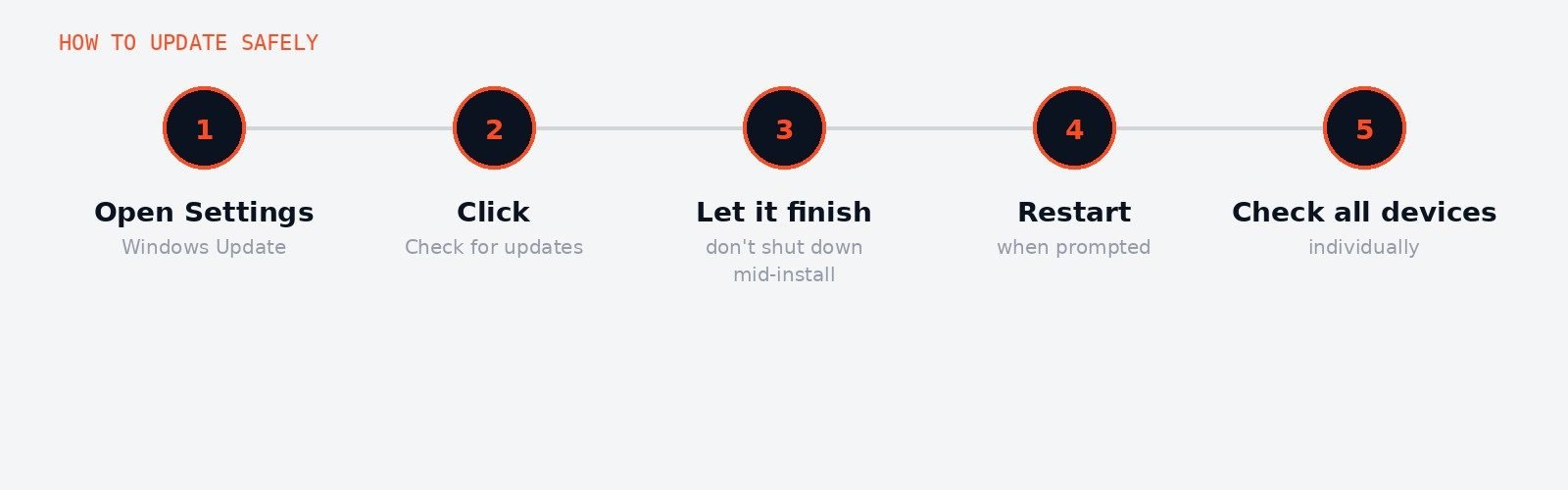
- Open Settings → Windows Update on your PC
- Click Check for updates
- Let the download and install complete fully — don't shut down mid-install
- Restart your device when prompted, rather than deferring it indefinitely
- If you manage multiple devices (family PCs, an old work laptop, etc.), check each one individually — updates don't always roll out to every device on the same day
For the full technical breakdown of every fixed vulnerability, Microsoft's own Security Update Guide is the authoritative source.
The Bigger Picture
This record-setting Windows Patch Tuesday batch reflects something larger happening across the industry right now: the sheer scale of modern software makes manual vulnerability management increasingly difficult, and companies are turning to AI-assisted triage to keep up. Expect this pattern — larger, AI-assisted patch cycles — to become the norm rather than the exception going forward.