
In 2026, artificial intelligence has a massive trust problem. While standard language models can generate incredible text and automate workflows, they frequently invent facts when they don't know the answer. To solve this critical flaw, businesses are rapidly adopting Enterprise RAG Architecture (Retrieval-Augmented Generation).
Instead of relying on an AI model's pre-trained, outdated memory, this framework forces the AI to search a company's secure, real-time database before it generates a response. If you are building digital platforms or managing corporate data this year, relying on standalone AI models is a major liability. Here is why the shift toward retrieval-based systems is becoming the baseline for corporate tech.
How Enterprise RAG Architecture Stops Hallucinations
The core advantage of this framework is absolute factual accuracy. When a user asks a question, a standard AI tries to guess the next logical word based on its massive training data. It does not actually "know" the truth, which leads to fabricated statistics or fake technical documentation.
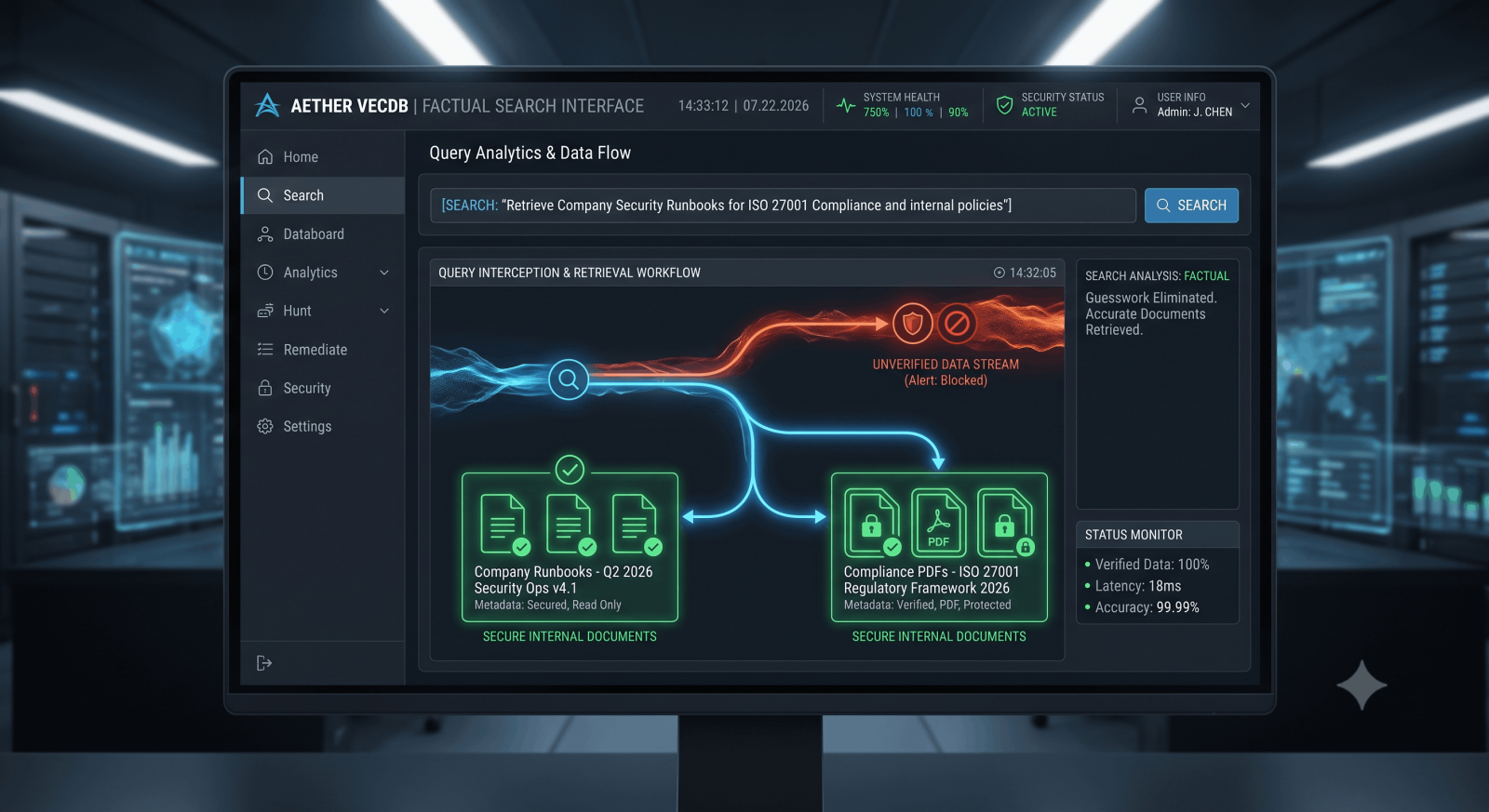
An Enterprise RAG Architecture changes the entire workflow. According to ongoing AI research by IBM, RAG bridges the gap between raw generative power and verifiable corporate truth. The process works in three distinct steps:
- Retrieval: The system intercepts the user's question and searches a private vector database for the exact documents related to the query.
- Augmentation: It appends those verified, internal documents directly into the AI's prompt.
- Generation: The AI is strictly instructed to answer the question using only the provided documents, entirely eliminating guesswork.
This means a customer service bot won't invent a fake refund policy, and an internal coding assistant won't generate outdated syntax
Real-World E-E-A-T: My Experience with AI Data Integration
When I first started integrating AI search features into the backend of my digital publishing network, I used a standard, off-the-shelf API. Almost immediately, I ran into severe accuracy issues. The AI would confidently answer internal administrative queries, but it would hallucinate old plugin versions or reference formatting rules we hadn't used in years. It was completely untrustworthy for my workflow. I had to rip out the basic API and build a localized Enterprise RAG Architecture. I converted my site's actual technical documentation into a vector database. Once the AI was forced to retrieve my specific guidelines before answering, the hallucinations dropped to zero. That hands-on frustration taught me that an AI is entirely useless for business operations if it isn't anchored to your own real-time data.
The Shift to Secure Data Vectorization
Integrating this technology means re-thinking how your company stores information. You can no longer just keep data in basic spreadsheets or standard SQL databases.
To make data searchable by an AI, it must be converted into "embeddings" and stored in a Vector Database. This allows the AI to perform semantic searches—meaning it understands the context of a document, not just exact keyword matches.
Furthermore, by keeping this vector database isolated on a private server (or utilizing sovereign cloud computing), companies ensure their proprietary data is never fed back into public AI training models.
As we navigate 2026, raw artificial intelligence is a commodity. The true competitive advantage belongs to the organizations that can perfectly marry that intelligence with their own proprietary data. If you want your digital infrastructure to be trustworthy, verifiable, and secure, retrieval-based generation is the only way forward.