Key Takeaways
- The Shift: Traditional SEO focuses on keywords, technical tags, and backlinks; GEO focuses on semantic depth, entity relationships, and becoming a direct factual answer for AI models.
- The Threat: As conversational and generative search answers proliferate, sites relying on generic listicles are experiencing sharp declines in organic reach.
- The Fix: Modern publishers must pivot toward high-information-gain content, structured entity definitions, and multi-platform authority across technical forums and social ecosystems.
1. What is Generative Engine Optimization (GEO)?
Generative Engine Optimization (GEO) is the discipline of optimizing web content so that it is ingested, synthesized, and cited by AI answer engines and Large Language Models (LLMs) such as Google AI Overviews, ChatGPT, Claude, and Perplexity.
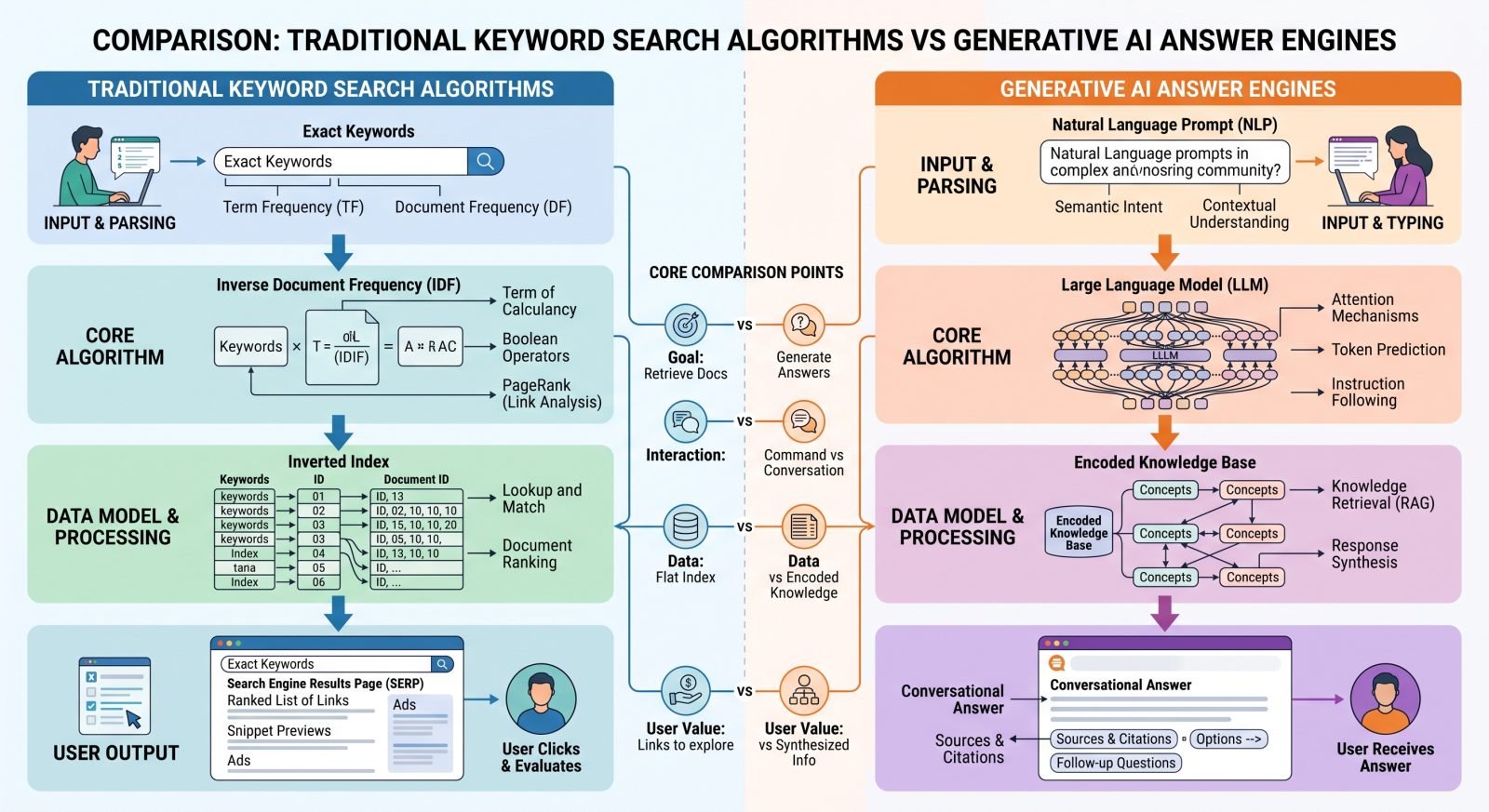
Traditional search engines operate as directories, indexing pages and returning a ranked list of blue links. Generative AI engines operate as automated research synthesizers, parsing multiple documents simultaneously to produce a single consolidated answer. If an article lacks deep factual structure or unique source material, generative models skip over it entirely during synthesis.
2. Traditional SEO vs. GEO: What Changed?
The technical mechanics of content discovery are fundamentally diverging from past ranking practices:
- Primary Goal: Traditional SEO focuses on securing position #1 on a standard search results page. GEO focuses on securing direct citation attribution within the synthesized AI summary.
- Content Architecture: SEO prioritizes target keyword density and exact query matching. GEO demands semantic density, verifiable data points, and clear conceptual relationships.
- Authority Signals: SEO counts raw backlink numbers and domain authority metrics. GEO validates entity consistency, brand sentiment, and cross-web topical authority.
- Discovery Path: SEO relies on a human user clicking a link directly from search results. GEO relies on an AI crawler parsing text, validating the source against knowledge graphs, and generating an inline citation.
Understanding this shift is especially critical for teams deploying autonomous multi-agent systems or evaluating infrastructure questions like on-device AI vs cloud AI, where real-time documentation must be ingestible by programmatic scrapers.
3. How to Optimize Your Content for AI in 2026
AI engines prioritize clear consensus, extractable facts, and clean data hierarchies. To position content for frequent citation, apply these three technical adjustments:
A. Maximize Information Gain
Generative engines already possess foundational definitions for standard technical concepts. Content that merely summarizes general knowledge provides zero information gain. High-performing pages introduce primary data, direct benchmark measurements, or proprietary methodologies that align with the official Google Search Central guidelines on delivering people-first, original insight.
B. Map Clear Entities and Direct Answers
LLMs map information through named entities (technologies, protocols, companies) and the semantic connections between them. Eliminate introductory fluff and vague topic framing. Start every major subtopic with a concise, direct definition sentence that an AI can lift directly as a factual snippet.
C. Build Cross-Platform Footprints
AI crawlers do not evaluate websites in total isolation. They crawl developer forums, community threads, technical discussions, and code repositories to corroborate whether an organization is genuinely recognized. A consistent presence across technical hubs reinforces your brand's node inside large knowledge graphs.
4. Our Take: The Techoria Verdict
The widespread transition to generative search is not eliminating website traffic; it is filtering out low-intent skimming. While raw click volume on shallow informational queries is shrinking, users following citations from AI summaries arrive with significantly higher intent and engagement.
Future-proofing a digital publication requires abandoning keyword stuffing in favor of structured data, verifiable claims, and unambiguous formatting designed to serve both algorithmic parsers and human readers.