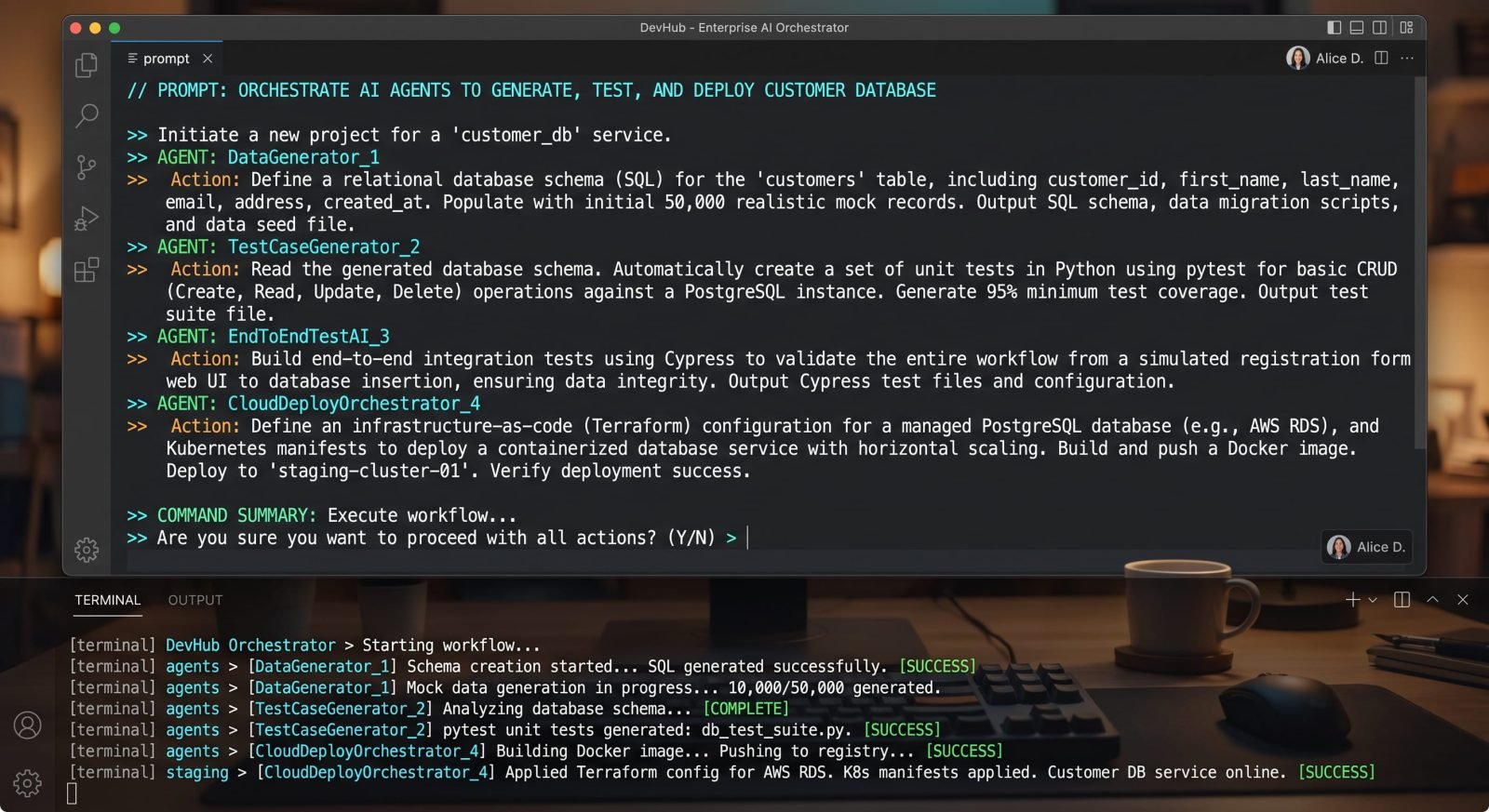
In the early 2020s, the phrase "AI will replace developers" was a frequent, albeit exaggerated, headline. Programmers quickly realized that early generative AI models were simply advanced autocompletes—useful for speeding up boilerplate typing, but incapable of architecting secure, complex systems. However, as the enterprise has rapidly transitioned from chat to autonomous action, the software engineering landscape in 2026 is undergoing a profound, structural metamorphosis.
According to major industry reports forecasting this year's landscape, AI is eating software. This does not mean developers are obsolete; rather, the fundamental nature of their work has changed. We are witnessing the death of traditional coding paradigms and the rapid ascent of Intent-Driven Development (IDD).
In this new era, humans define what should exist and why it matters, while autonomous multi-agent systems determine how and when it is built.
What is Intent-Driven Development?
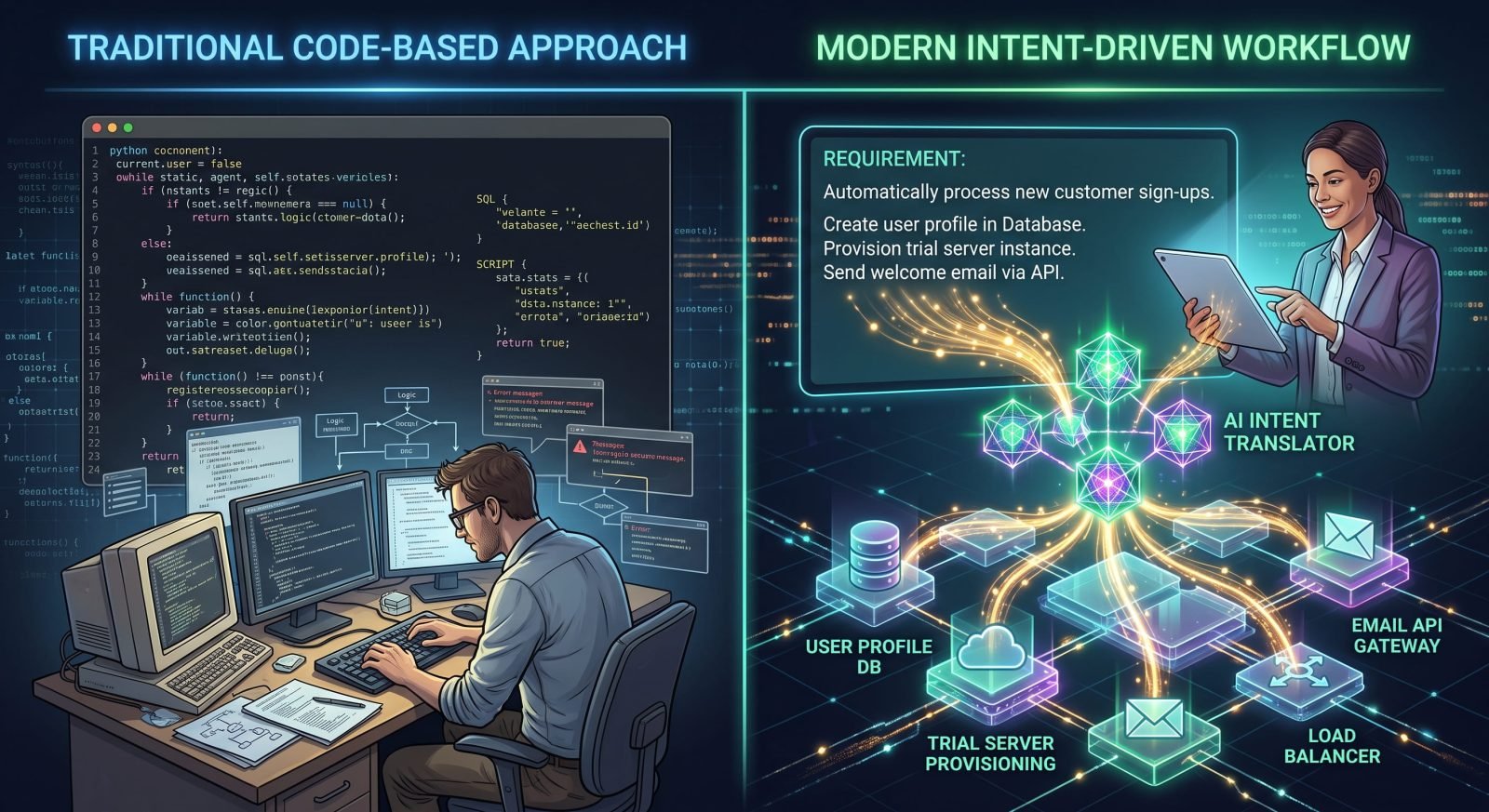
For decades, software development has been inherently instruction-based. Whether utilizing Waterfall, Agile, or DevOps methodologies, humans were the primary executors at every stage. A product manager wrote a user story, a developer translated that story into explicit lines of syntax, a QA engineer wrote manual test scripts, and a DevOps engineer configured the deployment servers.
Intent-Driven Development replaces human execution at the implementation layer. Instead of writing step-by-step logic, a developer writes "intent." An intent is a high-level, precise description of the desired business outcome, accompanied by strict operational constraints.
In a traditional workflow, building a user authentication system required writing hundreds of lines of code handling database connections, session tokens, and password hashing. Under IDD, the developer inputs a highly structured intent into an Agentic AI system: "Create a secure customer login portal using OAuth 2.0, ensure it connects to our existing AWS DynamoDB instance, restrict token expiration to 15 minutes, and write unit tests for edge-case login failures."
From that single, highly-contextualized command, a coordinated team of AI agents takes over. A Planning Agent maps the architecture; an Implementation Agent writes the syntax; a Testing Agent runs simulated attacks against the portal; and a Deployment Agent stages the code for human review. The developer has moved from being a bricklayer to an urban planner.
The Reality from the Frontlines: Code Review Bottlenecks
While the high-level theory of IDD sounds like a frictionless utopia, the reality of implementing it on the ground tells a slightly different story. Scanning through active developer communities, DevOps forums, and software engineering roundtables in late 2026 reveals a significant cultural and operational friction point: the bottleneck has moved.
Historically, the slowest part of building software was writing the code. Today, AI agents can generate a functional microservice in roughly four seconds. The new bottleneck is validation. Senior engineers frequently express frustration that while junior developers are utilizing IDD to output massive volumes of software, the senior staff is spending their entire day reviewing AI-generated pull requests.
As one engineering lead on a popular programming forum summarized: "My team is shipping features three times faster, but I haven't written a single line of code in a month. I spend my entire week reading AI-generated execution traces, trying to figure out if the implementation agent hallucinated a database relationship or missed a critical security edge case because the initial 'intent' prompt was too vague."
This real-world sentiment highlights a critical truth about IDD: it does not eliminate engineering complexity; it simply moves the complexity upward. The limiting factor in modern software development is no longer typing speed. It is the human ability to express intent with enough clarity, guardrails, and precision that an autonomous system can execute it correctly at scale.
The New Engineering Skillset: Context and Orchestration
Because AI is now handling the syntax, the definition of a "great software engineer" is being completely rewritten in 2026. Memorizing programming languages or specific framework quirks is becoming a commodity skill. Instead, the highest-paid engineers are mastering entirely new competencies:
1. Context Engineering
AI agents are only as good as the context they are provided. If an agent does not understand the company's legacy database structure or overarching business goals, it will generate technically correct but practically useless code. Modern developers must excel at mapping project domains, feeding architecture diagrams into context windows, and defining precise operational boundaries before the AI ever starts generating.
2. Systems Architecture and Governance
With multi-agent systems rapidly generating and deploying code, the risk of a minor bug snowballing into a catastrophic system failure is higher than ever. Engineers are shifting their focus to macro-level architecture, ensuring that different AI-generated microservices can communicate securely. Furthermore, governing autonomous agents—ensuring they don't violate data compliance laws or access restricted systems while writing software—has become a top priority.
3. Automated Testing as a First-Class Citizen
When AI is writing thousands of lines of code an hour, manual Quality Assurance (QA) is mathematically impossible. The only way IDD functions safely in a production environment is if developers build massive, automated testing safety nets. Modern teams write the tests (or define the intent for the tests) before the application code is generated, creating a rigid sandbox that the AI must successfully navigate before human approval is requested.
The Future of the Software Factory
Intent-Driven Development represents the most significant paradigm shift in software creation since the invention of the compiler. By elevating the human role from manual typing to strategic orchestration, organizations are drastically reducing their time-to-market.
However, as businesses sprint to adopt these multi-agent systems, a looming security crisis is quietly building. Handing the keys to the kingdom over to autonomous software systems introduces unprecedented vulnerabilities. As we look ahead, the industry's biggest challenge won't be building the software—it will be securing it.