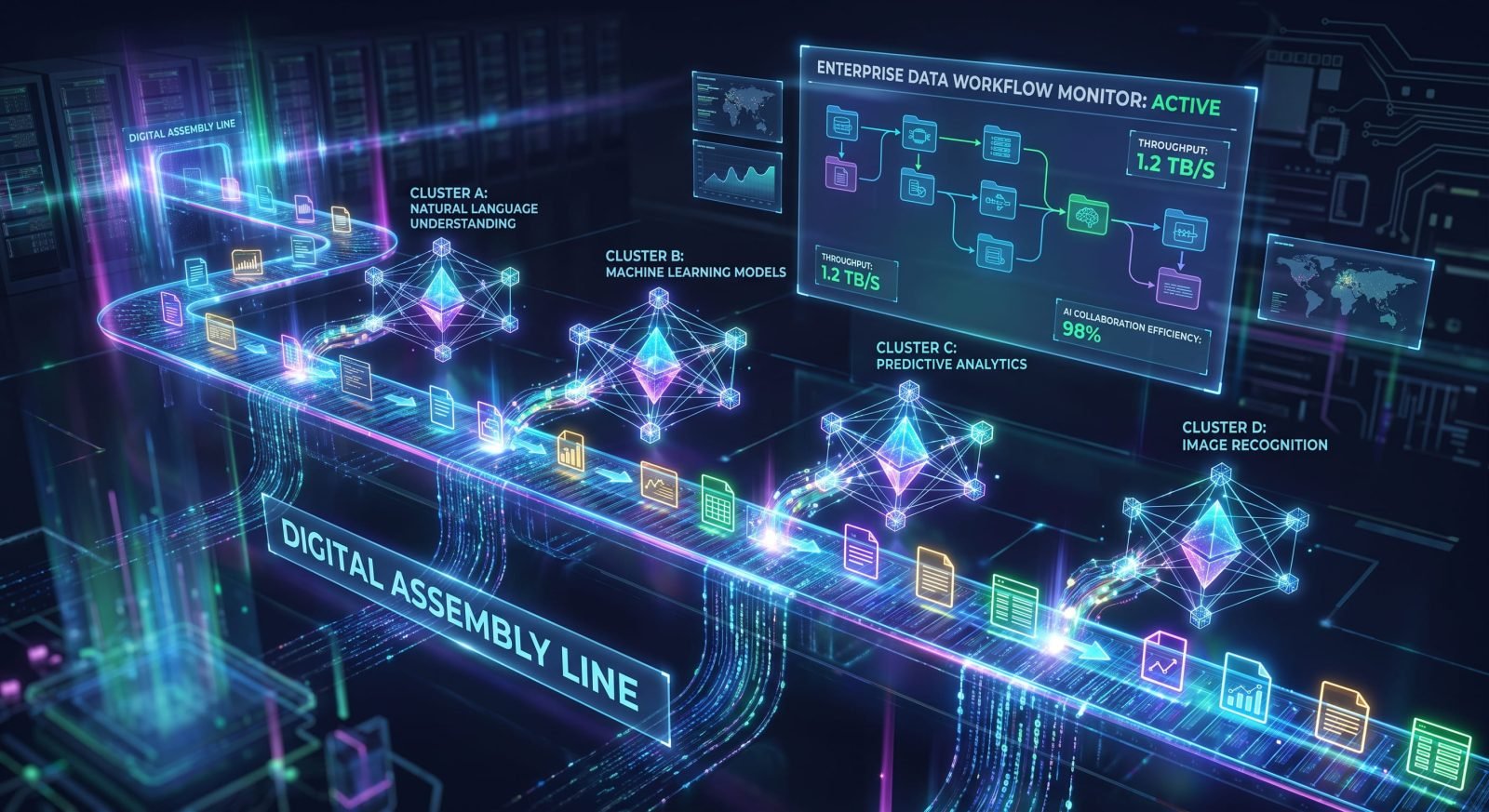
2026 marks a structural shift in how businesses utilize artificial intelligence. For the past three years, the tech industry has been obsessed with generative chatbots—tools that require constant human prompting to produce text, code, or images. But the technological conversation has rapidly evolved. We are no longer just asking AI to think or draft; we are now deploying AI to act.
This is the era of Agentic AI.
Unlike traditional AI assistants that wait passively for step-by-step instructions, Agentic AI systems possess real autonomy. They can plan, reason through multi-step problems, interact with external software ecosystems (like CRMs, ERPs, and payment gateways), and execute workflows from start to finish with minimal human oversight. The transition from experimentation to production is happening at breakneck speed. According to recent forecasts by Gartner, up to 40% of enterprise applications will feature integrated, task-specific AI agents by the end of 2026—a staggering leap from less than 5% in 2025.
Moving from Chat to Autonomous Action
To fully grasp the momentum behind Agentic AI, it is crucial to understand the difference between generative outputs and autonomous execution.
If you ask a standard 2024-era Large Language Model (LLM) to "resolve a customer refund," it will simply generate a polite email template for you to send. The human is still the central processor, required to copy the email, log into the payment gateway, process the refund, and update the CRM manually.
An Agentic AI system operates entirely differently. When prompted with the exact same goal, the agent autonomously executes the workflow:
- It logs into the CRM to verify the customer's purchase history.
- It checks the company's return policy parameters.
- It accesses the payment gateway via API to issue the financial return.
- It updates the ticketing system.
- It sends the final confirmation email to the customer.
The AI does not just provide the instructions; it completes the labor. This capability relies heavily on what researchers call "System 2" thinking—the ability for an AI to pause, reason, break a massive goal down into modular sub-tasks, and self-correct if it encounters a blocked pathway or an error along the way.
The Intent-Driven Development Shift
The rise of autonomous agents is forcing a fundamental redesign in how enterprise software is built, managed, and optimized. We are officially transitioning from "instruction-based" development to "intent-based" outcomes.
Historically, automating a business process meant hard-coding rigid, if-then rules. If a single variable broke the rule, the automation failed. Agentic AI, however, thrives on ambiguity. Business leaders now define the intent (e.g., "Keep our cloud computing costs under $10,000 this month without throttling the user experience") and the AI agent dynamically determines the best route to achieve that goal, adapting to real-time data fluctuations.
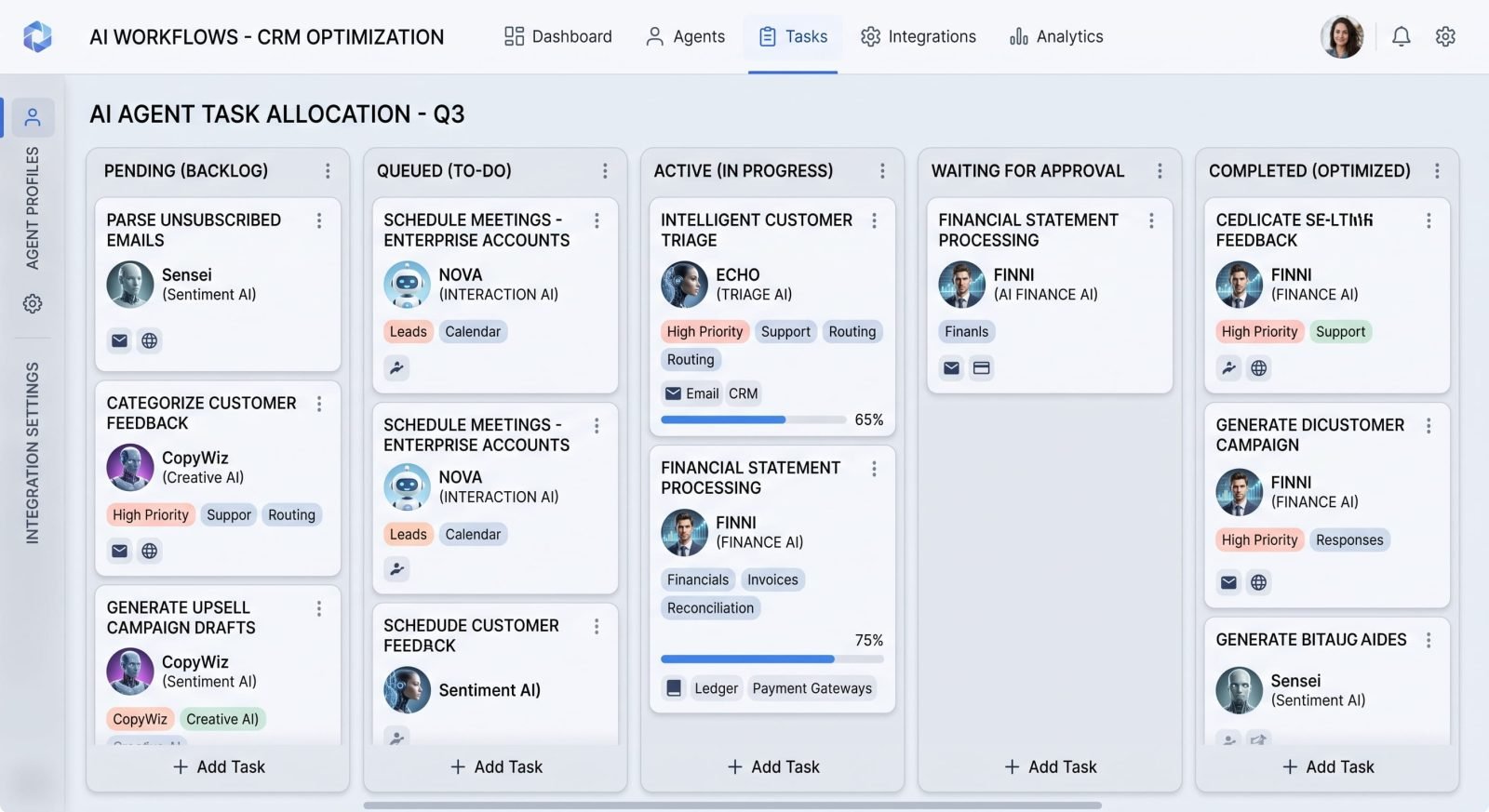
Major platforms are already capitalizing on this shift. Enterprise integrations have drastically simplified, with visual, no-code workflow builders allowing non-technical leaders to deploy specialized agents.
The Reality of Project Abandonment and "Shadow AI"
Despite the massive influx of enterprise capital—with Deloitte forecasting that 50% of companies using GenAI will launch Agentic AI pilots or proofs of concept by 2027—deploying autonomous agents is not a frictionless process.
Scanning through enterprise IT subreddits, DevOps forums, and cybersecurity panels in late 2026 reveals a growing anxiety among middle management and system administrators. The core issue is rarely whether the AI works, but rather how to govern it. IT professionals are sounding the alarm on "Shadow AI"—situations where marketing or sales teams deploy autonomous agents without proper Identity Access Management (IAM) protocols.
As one systems architect noted on a popular DevOps forum recently, "We have bots making automated financial decisions in our CRM, but they are operating under the login credentials of a human sales director. If the agent hallucinates and deletes a client account, the audit trail points to the human, not the machine."
This real-world friction highlights the "Governance Gap". While the software is capable of total autonomy, enterprises are quickly realizing they must mandate "human-in-the-loop" approval gates for any agentic action tied to financial, legal, or reputational outcomes.
The Digital Assembly Line: Multi-Agent Systems
The final frontier of 2026's AI landscape is orchestration. The most sophisticated enterprises are realizing that deploying a single, monolithic AI agent to handle everything is highly inefficient. Instead, they are building coordinated "multi-agent systems."
By breaking complex workflows into modular steps handled by task-specialized digital entities, businesses are achieving unprecedented speed, accuracy, and resilience. Agentic AI proves that the future of business is not about replacing human workers with chatbots. It is about elevating humans to the role of orchestrators, strategists, and governors, while autonomous agents handle the execution.